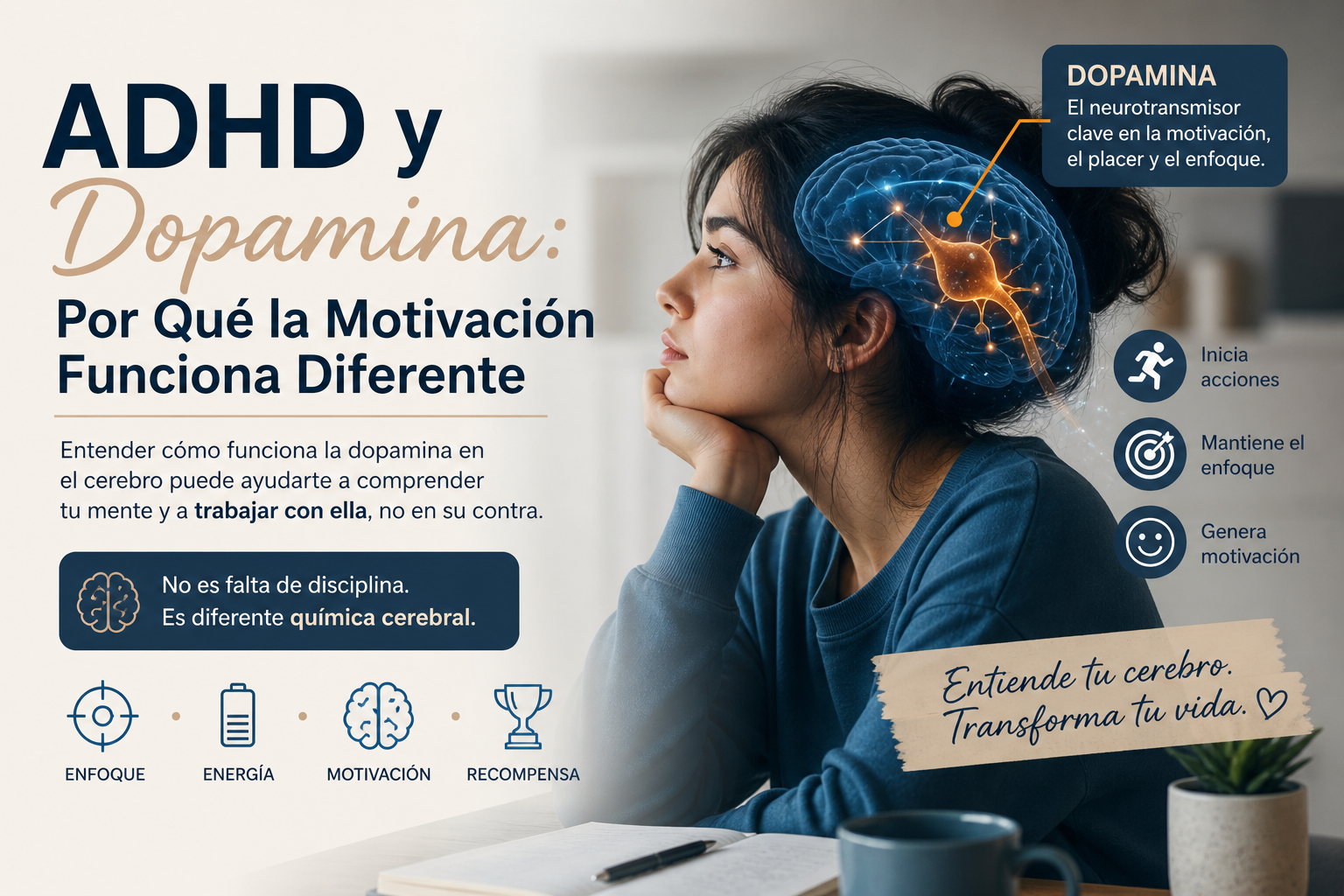
ADHD y Dopamina: Por Qué la Motivación Funciona Diferente
¿Qué es el ADHD y qué tiene que ver con la dopamina?
Muchas personas piensan que el ADHD (Trastorno por Déficit de Atención e Hiperactividad) solo afecta la atención. Sin embargo, una de las claves más importantes para entenderlo es la dopamina.
La dopamina es un neurotransmisor que juega un papel fundamental en la motivación, el enfoque, el placer y el sistema de recompensa del cerebro.
En personas con ADHD, el sistema de dopamina funciona de manera diferente. Esto no significa que algo esté “mal”, sino que el cerebro procesa la motivación de otra forma.
¿Cómo afecta la dopamina a la motivación?
La dopamina ayuda al cerebro a iniciar tareas, mantener el enfoque y completar actividades.
Cuando los niveles de dopamina no están equilibrados, pueden aparecer dificultades como:
• Dificultad para empezar tareas
• Falta de motivación en actividades rutinarias
• Problemas para mantener el enfoque
• Tendencia a buscar estímulos más interesantes o gratificantes
Por eso, muchas personas con ADHD pueden tener dificultad con tareas aburridas, pero pueden concentrarse intensamente en algo que les interesa.
ADHD no es falta de disciplina
Es importante entender que el ADHD no es pereza ni falta de voluntad.
Muchas veces, las personas con ADHD quieren hacer las cosas, pero su cerebro no recibe la misma señal de “recompensa” al realizar ciertas tareas.
Esto puede llevar a frustración, culpa o baja autoestima si no se comprende correctamente.
El papel del sistema de recompensa
El cerebro humano está diseñado para buscar recompensas. En el ADHD, este sistema puede requerir más estimulación para activarse.
Por eso, actividades como:
• redes sociales
• videojuegos
• contenido rápido y estimulante
pueden resultar más atractivas, ya que generan una liberación más inmediata de dopamina.
Mientras que tareas como estudiar, trabajar o realizar actividades repetitivas pueden sentirse más difíciles.
Estrategias que pueden ayudar
Comprender el rol de la dopamina permite implementar estrategias más efectivas.
Algunas recomendaciones incluyen:
1. Dividir tareas en pasos pequeños
Las tareas grandes pueden ser abrumadoras. Dividirlas facilita el inicio.
2. Crear recompensas inmediatas
Pequeñas recompensas ayudan a activar el sistema de motivación.
3. Aumentar la estimulación
Escuchar música, cambiar el ambiente o usar temporizadores puede ayudar a mantener el enfoque.
4. Usar recordatorios externos
Listas, alarmas y calendarios ayudan a compensar la memoria de trabajo.
Tratamiento y apoyo
En algunos casos, el tratamiento puede incluir terapia, cambios en el estilo de vida y/o medicación.
La medicación, cuando es apropiada, puede ayudar a regular los niveles de dopamina y mejorar el funcionamiento diario.
Es importante recordar que el tratamiento no busca cambiar quién eres, sino ayudarte a funcionar mejor y sentirte más equilibrado.
Reflexión final
Entender el ADHD desde una perspectiva biológica cambia completamente la forma en que lo vemos.
No se trata de esforzarse más, sino de entender cómo funciona tu cerebro y aprender a trabajar con él.
Cuando comprendes la dopamina, comienzas a entender por qué la motivación funciona diferente — y eso puede ser el primer paso hacia un mejor bienestar.
Si quieren hacer una cita para hablar con un professional haga clic aqui.
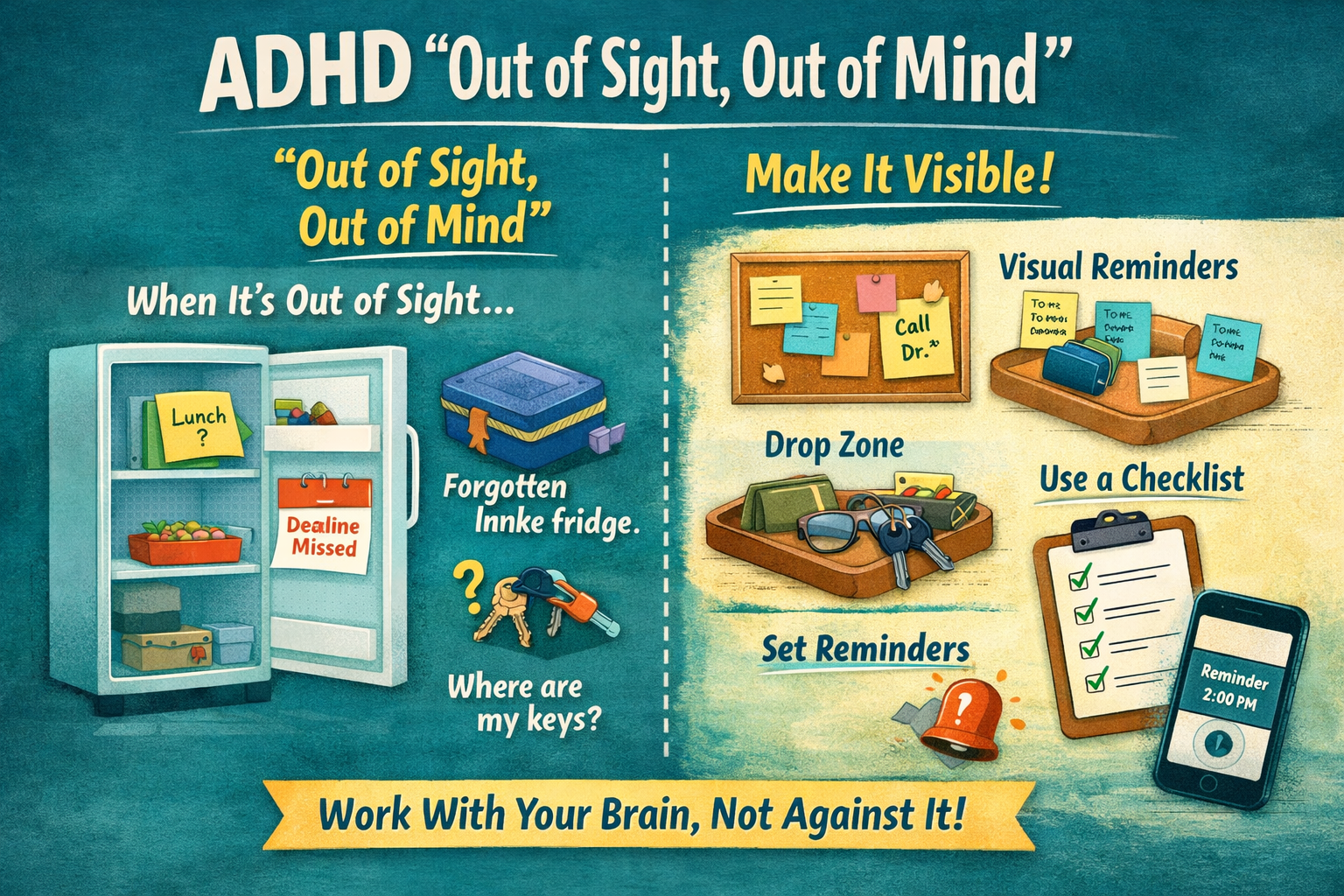
ADHD “Out of Sight, Out of Mind”: Why It Happens and Strategies That Actually Help
What Does “Out of Sight, Out of Mind” Mean in ADHD?
Have you ever put something down… and the moment it’s no longer in front of you, it’s like it completely disappeared from your mind?
For many people with ADHD, this is a very real and common experience.
This is often described as “out of sight, out of mind.”
It is not laziness.
It is not carelessness.
It is not a lack of responsibility.
It is related to how the ADHD brain processes attention, memory, and visual cues.
Why This Happens in ADHD
The ADHD brain relies heavily on external, visible information to keep track of tasks, responsibilities, and objects.
When something is visible, it stays active in awareness.
But once it disappears from view, the brain may stop tracking it altogether.
This can affect:
Remembering tasks
Keeping track of responsibilities
Following through on plans
Managing daily routines
This is closely connected to executive function, which includes working memory and organization.
Common Real-Life Examples
People with ADHD often experience things like:
Forgetting food in the fridge
Missing deadlines
Forgetting to respond to texts or emails
Losing track of important items
Buying things they already own
These are not signs of failure — they are signs of how the brain is wired.
ADHD Is Not About Trying Harder
One of the biggest misconceptions is that people with ADHD just need to “try harder” or “be more organized.”
In reality, traditional organization methods often fail because they are not designed for how the ADHD brain works.
The key is not perfection.
The key is creating systems that support the brain.
Strategies That Actually Help
Here are simple, practical strategies that work with ADHD instead of against it:
1. Make Things Visible
Use clear containers, open shelves, or leave important items in places where you will see them daily.
2. Use Visual Reminders
Sticky notes, whiteboards, or phone widgets can help keep important tasks in sight.
3. Create “Drop Zones”
Designate one consistent, visible place for essentials like keys, wallet, medications, or documents.
4. Externalize Your Memory
Use tools like calendars, reminders, alarms, and checklists.
Think of these as an external brain system.
Work With Your Brain, Not Against It
ADHD does not mean something is wrong with you.
It means your brain processes information differently.
When you create an environment that supports visibility, structure, and reminders, daily life becomes more manageable.
Final Thought
If you experience “out of sight, out of mind,” remember this:
Your brain isn’t broken.
It just works better when your environment works with it.
If you would like support understanding ADHD or improving daily functioning, feel free to schedule a consultation.
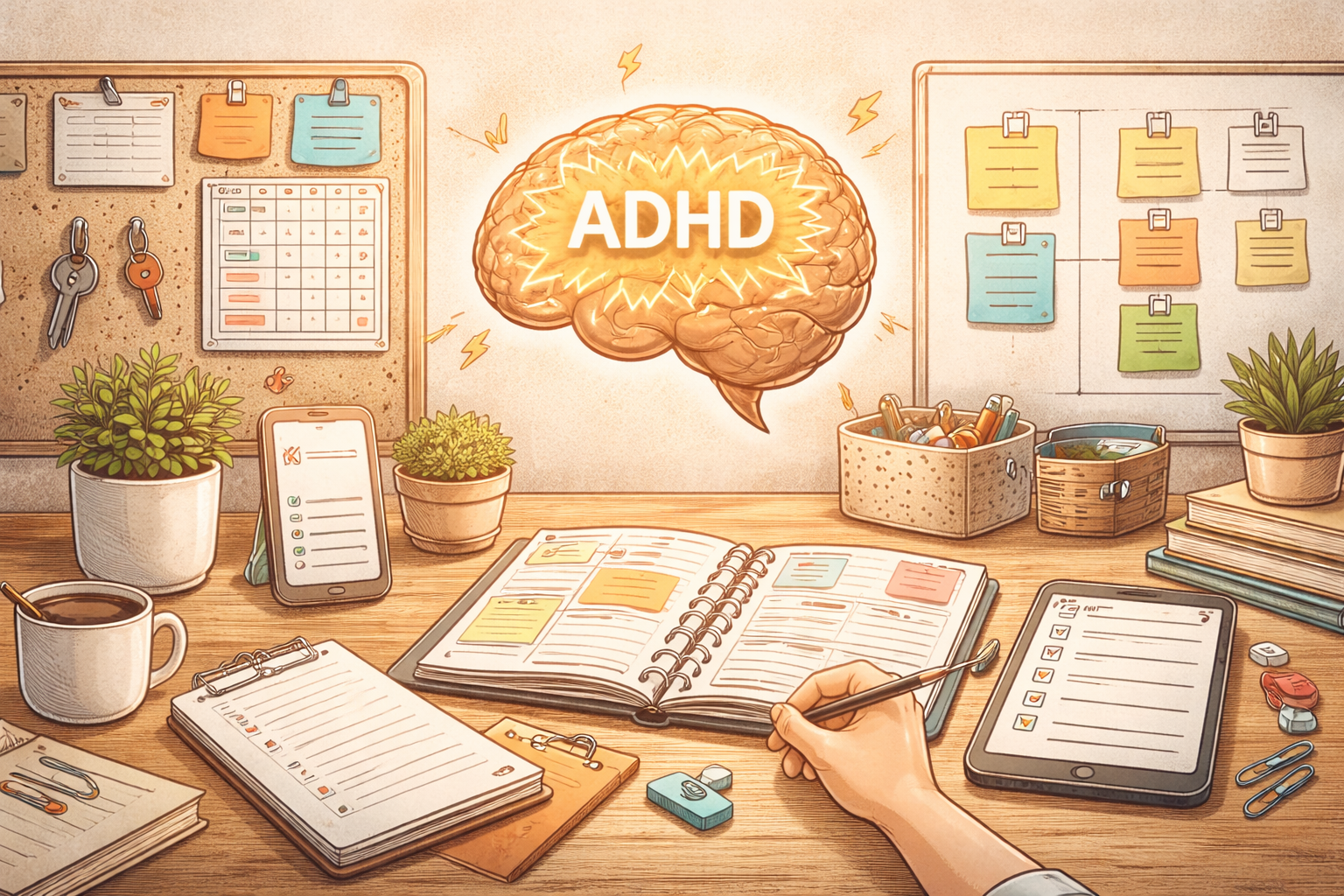
ADHD Organization Strategies That Actually Work
Many individuals with ADHD struggle with organization, time management, and keeping up with daily responsibilities. Traditional organization advice often emphasizes strict routines, complex systems, and long-term consistency. While these approaches may work for some people, they often fail for individuals with ADHD.
This is because ADHD affects executive functioning — the brain processes responsible for planning, prioritizing, remembering tasks, and managing attention.
Instead of relying on complicated systems that require constant maintenance, people with ADHD often benefit from simple and visual strategies that reduce mental overload and make everyday tasks easier to manage.
Understanding how ADHD affects organization can help individuals create practical systems that work with their brain rather than against it.
Why Traditional Organization Advice Often Fails for ADHD
Many productivity systems are built around the idea that people can consistently follow routines and remember multiple steps without external reminders. For someone with ADHD, this can quickly become overwhelming.
Executive functioning challenges may make it difficult to:
• Remember where items were placed
• Maintain complicated organization systems
• Break large tasks into manageable steps
• Prioritize multiple responsibilities
• Stay focused long enough to complete tasks
When organization systems become too complex, they often get abandoned. The goal should not be perfect organization but creating systems that reduce friction in daily life.
Simple Organization Strategies That Work Better for ADHD
People with ADHD often benefit from strategies that are visual, simple, and easy to maintain.
Keep Frequently Used Items Visible
“Out of sight, out of mind” is a common experience for people with ADHD. Keeping important items in visible places can reduce the chances of forgetting them.
For example:
• Keys in a visible tray near the door
• Medication in a clearly labeled container
• Important documents in a designated open folder
Creating consistent “homes” for commonly used items can significantly reduce stress and lost time.
Use Digital Reminders
Digital tools can act as an external support system for memory and task management.
Helpful tools include:
• Phone alarms
• Calendar reminders
• Task management apps
• Smart assistants
Instead of relying on memory alone, external reminders can help keep important responsibilities from being forgotten.
Break Tasks Into Smaller Steps
Large tasks can feel overwhelming for individuals with ADHD, often leading to procrastination or avoidance.
Breaking tasks into small, clearly defined steps can make them easier to start and complete.
For example, instead of writing “clean the house,” break it down into:
• Put away laundry
• Clear kitchen counter
• Take out trash
Completing small tasks builds momentum and reduces the mental resistance to getting started.
Externalize Information
Trying to hold multiple pieces of information in your mind at once can quickly become exhausting.
Externalizing information means placing it somewhere outside of your brain, such as:
• Written notes
• Whiteboards
• Planners
• Digital task lists
This allows the brain to focus on completing tasks instead of remembering everything.
Organization With ADHD Is About Reducing Mental Overload
The goal for individuals with ADHD is not to become perfectly organized. Instead, the focus should be on creating simple structures that reduce mental strain and make everyday life easier to manage.
Small adjustments can make a significant difference in productivity, emotional well-being, and overall stress levels.
Understanding how ADHD affects organization allows individuals to develop strategies that support their brain rather than working against it.
When to Seek Professional Support
If ADHD symptoms are significantly affecting daily responsibilities, work performance, or emotional well-being, professional support can help identify strategies and treatment options that improve daily functioning.
ADHD is a neurological condition, and with the right tools, individuals can build systems that support productivity, emotional balance, and long-term success.
If ADHD symptoms are affecting organization, focus, or daily responsibilities, learning more about psychiatric evaluation and medication management may help provide additional support.
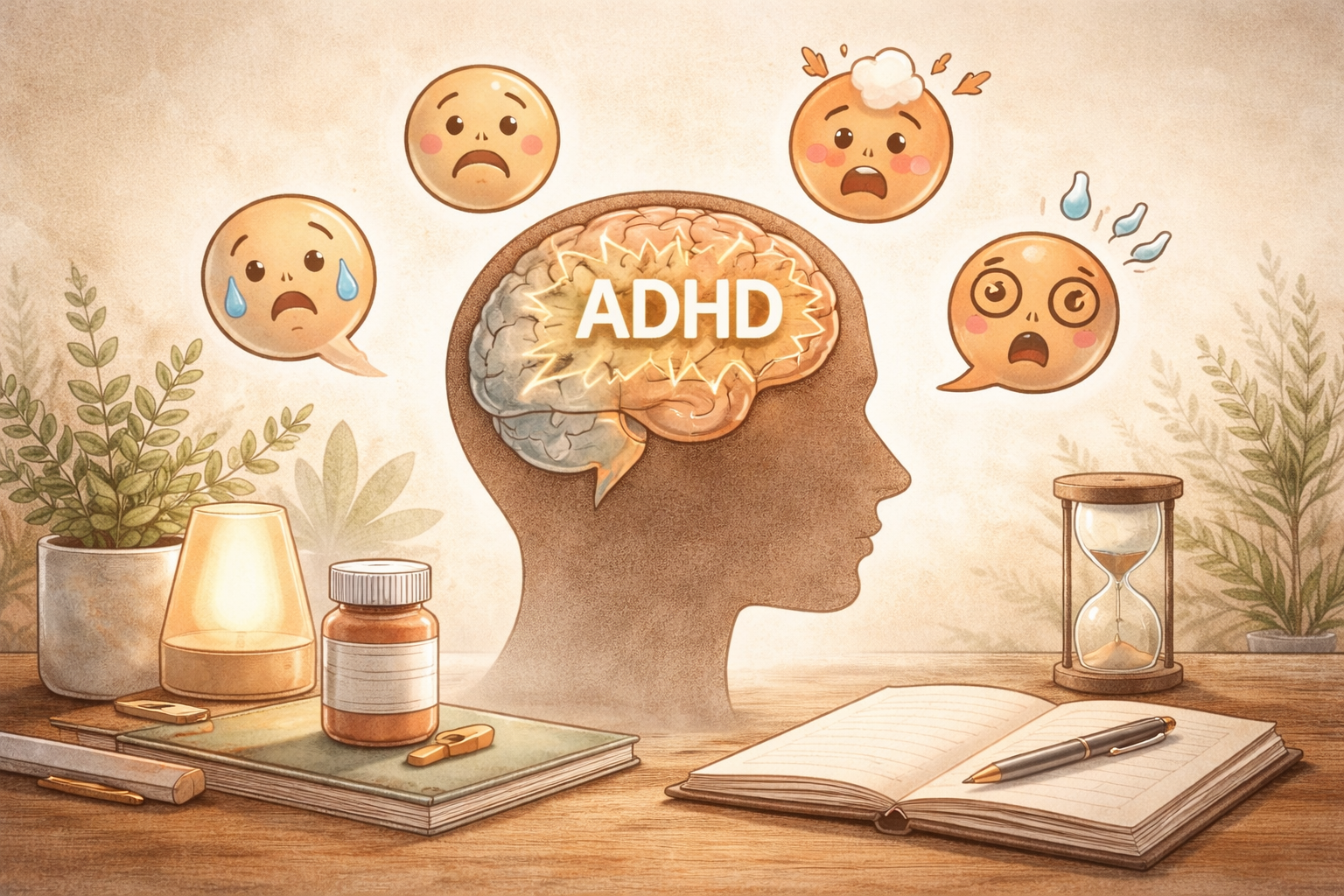
How ADHD Affects Emotional Regulation (And How to Manage It)
Introduction
Many people associate ADHD primarily with difficulty focusing or staying organized. However, one of the most overlooked aspects of ADHD is how it affects emotional regulation.
Individuals with ADHD often experience emotions more intensely than others. Feelings such as frustration, rejection, excitement, or disappointment may come on quickly and feel overwhelming. This does not reflect a lack of character or self-control. Instead, it is connected to how the brain processes impulses, emotional signals, and stress responses.
Understanding this connection can help individuals with ADHD develop healthier strategies for managing emotions and improving overall well-being.
What Is Emotional Regulation?
Emotional regulation refers to the ability to recognize, manage, and respond to emotions in a balanced way.
For most people, the brain naturally slows down emotional reactions and helps them think before responding. However, individuals with ADHD may experience challenges in this area because the brain regions responsible for impulse control and emotional processing function differently.
This can make emotional responses feel immediate and intense.
Why ADHD Can Make Emotions Feel Stronger
Research suggests that ADHD affects the brain’s executive functioning system. Executive functions help us regulate attention, control impulses, and manage emotional reactions.
Because of these neurological differences, individuals with ADHD may experience:
• Sudden frustration or irritability
• Difficulty calming down once upset
• Sensitivity to rejection or criticism
• Strong emotional reactions to small stressors
• Feeling overwhelmed by intense emotions
These experiences are common and do not indicate weakness or poor character.
Common Emotional Challenges in ADHD
People with ADHD may struggle with several emotional patterns, including:
Rejection Sensitivity
Some individuals experience what is called rejection sensitive dysphoria, where criticism or perceived rejection can trigger intense emotional pain.
Frustration Tolerance
Small setbacks may feel extremely discouraging or overwhelming.
Rapid Emotional Shifts
Emotions can change quickly, making it harder to stay emotionally balanced in stressful situations.
Understanding these patterns can help individuals respond to emotions with more awareness and compassion for themselves.
Strategies That Can Help Improve Emotional Regulation
While emotional regulation can be challenging for people with ADHD, there are effective strategies that can help.
Awareness of Emotional Triggers
Recognizing the situations that trigger emotional reactions is the first step in managing them.
Developing Emotional Regulation Skills
Techniques such as mindfulness, cognitive behavioral strategies, and structured routines can help improve emotional control.
Professional Support
Working with a mental health professional can help individuals develop personalized strategies for managing emotional responses.
Medication When Appropriate
For some individuals, medication can help support brain function related to impulse control and emotional regulation. Medication is not a complete solution but can be a helpful tool alongside therapy and lifestyle strategies.
When to Seek Professional Support
If emotional responses are beginning to interfere with relationships, work performance, or daily functioning, it may be helpful to speak with a mental health professional.
ADHD is a neurological condition, and understanding how it affects emotional regulation can lead to more effective support, treatment, and self-awareness.
If ADHD symptoms are affecting emotional balance or daily life, professional guidance can help clarify what is happening and explore supportive treatment options.
If you are struggling with ADHD symptoms, learning more about psychiatric evaluation and medication management may help provide clarity and support.