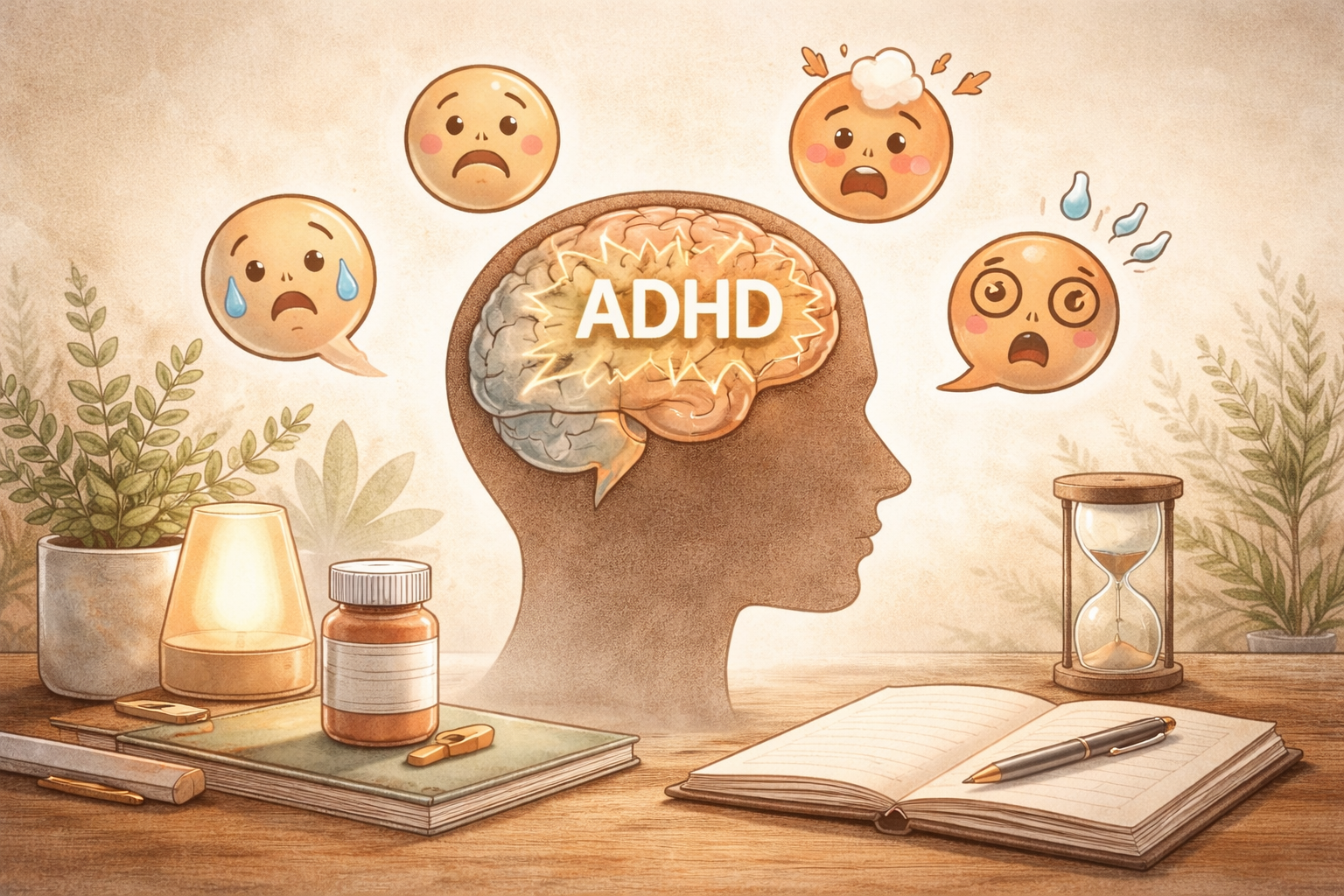
How ADHD Affects Emotional Regulation (And How to Manage It)
Introduction
Many people associate ADHD primarily with difficulty focusing or staying organized. However, one of the most overlooked aspects of ADHD is how it affects emotional regulation.
Individuals with ADHD often experience emotions more intensely than others. Feelings such as frustration, rejection, excitement, or disappointment may come on quickly and feel overwhelming. This does not reflect a lack of character or self-control. Instead, it is connected to how the brain processes impulses, emotional signals, and stress responses.
Understanding this connection can help individuals with ADHD develop healthier strategies for managing emotions and improving overall well-being.
What Is Emotional Regulation?
Emotional regulation refers to the ability to recognize, manage, and respond to emotions in a balanced way.
For most people, the brain naturally slows down emotional reactions and helps them think before responding. However, individuals with ADHD may experience challenges in this area because the brain regions responsible for impulse control and emotional processing function differently.
This can make emotional responses feel immediate and intense.
Why ADHD Can Make Emotions Feel Stronger
Research suggests that ADHD affects the brain’s executive functioning system. Executive functions help us regulate attention, control impulses, and manage emotional reactions.
Because of these neurological differences, individuals with ADHD may experience:
• Sudden frustration or irritability
• Difficulty calming down once upset
• Sensitivity to rejection or criticism
• Strong emotional reactions to small stressors
• Feeling overwhelmed by intense emotions
These experiences are common and do not indicate weakness or poor character.
Common Emotional Challenges in ADHD
People with ADHD may struggle with several emotional patterns, including:
Rejection Sensitivity
Some individuals experience what is called rejection sensitive dysphoria, where criticism or perceived rejection can trigger intense emotional pain.
Frustration Tolerance
Small setbacks may feel extremely discouraging or overwhelming.
Rapid Emotional Shifts
Emotions can change quickly, making it harder to stay emotionally balanced in stressful situations.
Understanding these patterns can help individuals respond to emotions with more awareness and compassion for themselves.
Strategies That Can Help Improve Emotional Regulation
While emotional regulation can be challenging for people with ADHD, there are effective strategies that can help.
Awareness of Emotional Triggers
Recognizing the situations that trigger emotional reactions is the first step in managing them.
Developing Emotional Regulation Skills
Techniques such as mindfulness, cognitive behavioral strategies, and structured routines can help improve emotional control.
Professional Support
Working with a mental health professional can help individuals develop personalized strategies for managing emotional responses.
Medication When Appropriate
For some individuals, medication can help support brain function related to impulse control and emotional regulation. Medication is not a complete solution but can be a helpful tool alongside therapy and lifestyle strategies.
When to Seek Professional Support
If emotional responses are beginning to interfere with relationships, work performance, or daily functioning, it may be helpful to speak with a mental health professional.
ADHD is a neurological condition, and understanding how it affects emotional regulation can lead to more effective support, treatment, and self-awareness.
If ADHD symptoms are affecting emotional balance or daily life, professional guidance can help clarify what is happening and explore supportive treatment options.
If you are struggling with ADHD symptoms, learning more about psychiatric evaluation and medication management may help provide clarity and support.