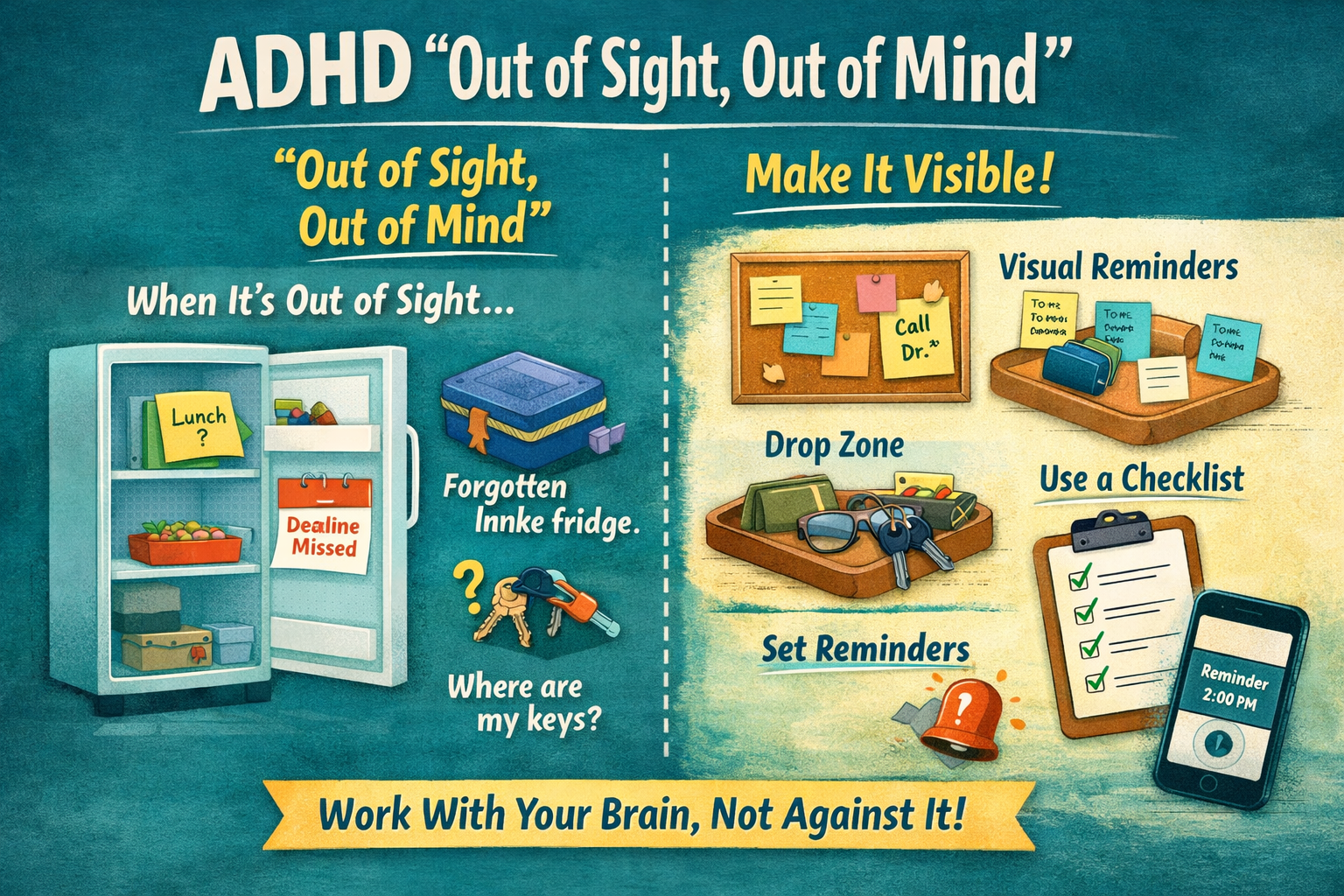
ADHD “Out of Sight, Out of Mind”: Why It Happens and Strategies That Actually Help
What Does “Out of Sight, Out of Mind” Mean in ADHD?
Have you ever put something down… and the moment it’s no longer in front of you, it’s like it completely disappeared from your mind?
For many people with ADHD, this is a very real and common experience.
This is often described as “out of sight, out of mind.”
It is not laziness.
It is not carelessness.
It is not a lack of responsibility.
It is related to how the ADHD brain processes attention, memory, and visual cues.
Why This Happens in ADHD
The ADHD brain relies heavily on external, visible information to keep track of tasks, responsibilities, and objects.
When something is visible, it stays active in awareness.
But once it disappears from view, the brain may stop tracking it altogether.
This can affect:
Remembering tasks
Keeping track of responsibilities
Following through on plans
Managing daily routines
This is closely connected to executive function, which includes working memory and organization.
Common Real-Life Examples
People with ADHD often experience things like:
Forgetting food in the fridge
Missing deadlines
Forgetting to respond to texts or emails
Losing track of important items
Buying things they already own
These are not signs of failure — they are signs of how the brain is wired.
ADHD Is Not About Trying Harder
One of the biggest misconceptions is that people with ADHD just need to “try harder” or “be more organized.”
In reality, traditional organization methods often fail because they are not designed for how the ADHD brain works.
The key is not perfection.
The key is creating systems that support the brain.
Strategies That Actually Help
Here are simple, practical strategies that work with ADHD instead of against it:
1. Make Things Visible
Use clear containers, open shelves, or leave important items in places where you will see them daily.
2. Use Visual Reminders
Sticky notes, whiteboards, or phone widgets can help keep important tasks in sight.
3. Create “Drop Zones”
Designate one consistent, visible place for essentials like keys, wallet, medications, or documents.
4. Externalize Your Memory
Use tools like calendars, reminders, alarms, and checklists.
Think of these as an external brain system.
Work With Your Brain, Not Against It
ADHD does not mean something is wrong with you.
It means your brain processes information differently.
When you create an environment that supports visibility, structure, and reminders, daily life becomes more manageable.
Final Thought
If you experience “out of sight, out of mind,” remember this:
Your brain isn’t broken.
It just works better when your environment works with it.
If you would like support understanding ADHD or improving daily functioning, feel free to schedule a consultation.