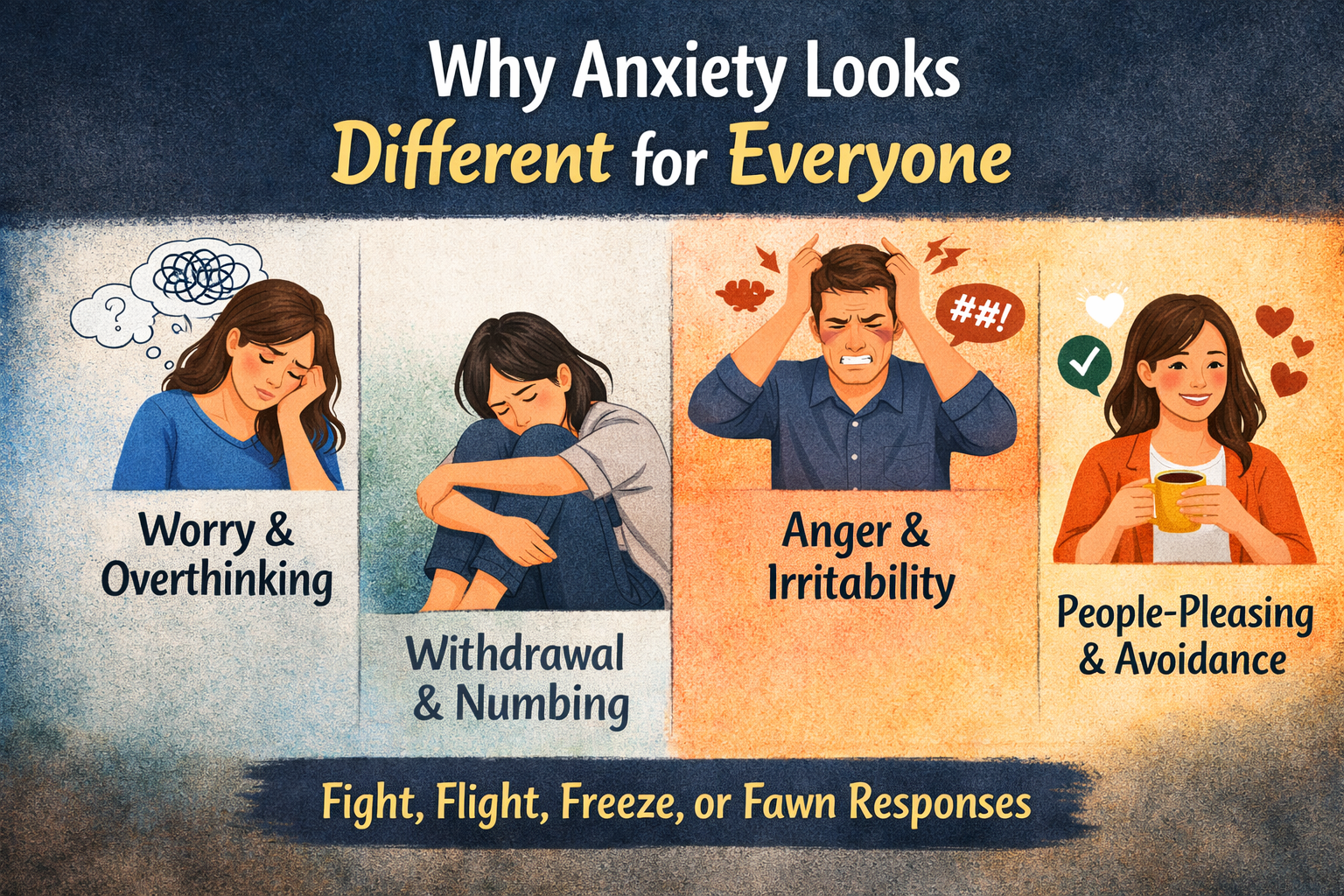
Why Anxiety Looks Different for Everyone
Why Anxiety Looks Different for Everyone
When most people think about anxiety, they imagine someone who is constantly worried, nervous, or panicking.
But anxiety does not always look like that.
In reality, anxiety can show up in many different ways, and sometimes people don’t even realize what they are experiencing is anxiety at all.
Understanding this can be incredibly important for recognizing what is happening in your mind and body.
Anxiety Is the Body’s Alarm System
At its core, anxiety is not simply a feeling—it is part of the body’s natural alarm system.
Your nervous system is constantly scanning your environment for potential threats or dangers. When it detects something that feels unsafe, it activates a response designed to protect you.
This response can show up physically as:
• a racing heart
• tightness in the chest
• shortness of breath
• stomach discomfort
• restlessness
This reaction is meant to prepare the body to respond quickly in order to stay safe.
However, the way this alarm system expresses itself can be very different from person to person.
The Fight, Flight, Freeze, or Fawn Response
When the nervous system senses danger or stress, it may activate different survival responses.
Some people experience fight, which can look like irritability, frustration, or anger.
Others experience flight, which may show up as restlessness, panic, overthinking, or constantly trying to escape stressful situations.
Some people experience freeze, where they shut down emotionally, withdraw, or feel numb and disconnected.
Another response that many people experience is fawn, where someone becomes overly focused on pleasing others, avoiding conflict, or trying to keep everyone around them happy.
All of these responses can be connected to anxiety.
When Anxiety Shows Up as Anger or Irritability
Many people say things like:
“I don’t have anxiety. I just get angry.”
But anger and irritability can sometimes be the body’s way of responding to internal stress or feeling overwhelmed.
When the nervous system feels constantly on alert, the brain may respond with frustration, impatience, or emotional reactivity.
In these situations, anger may actually be an expression of underlying anxiety.
When Anxiety Looks Like Overthinking
For some individuals, anxiety appears as constant mental activity.
The mind repeatedly tries to analyze situations, predict outcomes, or prevent potential problems.
This may look like:
• replaying conversations
• worrying about future events
• imagining worst-case scenarios
• difficulty turning off racing thoughts
The brain is essentially trying to maintain control by predicting every possible outcome.
When Anxiety Looks Like Withdrawal
Other people experience anxiety very differently.
Instead of becoming restless or reactive, they may begin to withdraw.
This can include:
• avoiding social situations
• isolating from others
• shutting down emotionally
• feeling mentally overwhelmed
In these situations, the nervous system attempts to reduce stimulation by pulling away from stressors.
Why Your Nervous System Responds This Way
Your nervous system learns patterns based on life experiences.
For example, if someone grew up in an environment where staying alert helped them stay safe, their brain may continue using that same strategy later in life.
These patterns are not signs that something is wrong with you.
They are learned survival responses.
Understanding this can help reduce the shame or confusion many people feel when they struggle with anxiety symptoms.
Learning to Recognize Your Anxiety
Because anxiety can appear in many different ways, recognizing it is often the first step toward improving mental health.
When people understand how their nervous system responds to stress, they can begin to develop healthier coping strategies.
Therapy, self-awareness, and supportive mental health care can help individuals learn how to regulate their nervous system and respond to stress in healthier ways.
You Are Not Broken
One of the most important things to remember is this:
Your anxiety does not mean something is wrong with you.
It often means your nervous system learned to prioritize survival before it learned safety.
With the right support, people can learn new ways to regulate emotions, manage stress, and build a greater sense of internal stability.
If you are struggling with anxiety or emotional overwhelm, professional support can help you better understand your nervous system and develop effective strategies for healing.
👉 Schedule a consultation today to learn more about your mental health and available treatment options.