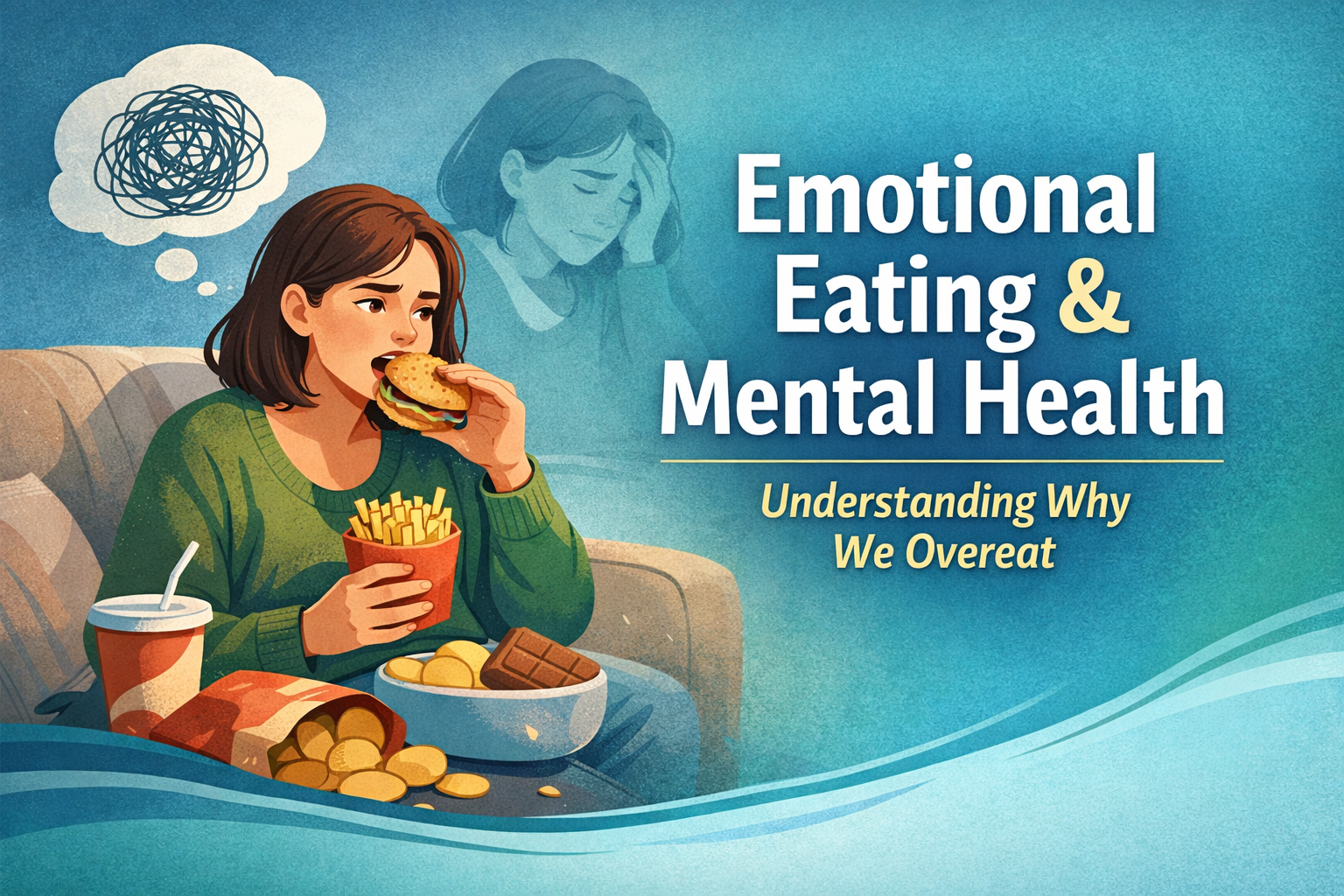
Emotional Eating and Mental Health: Why We Overeat and How to Understand It
What Is Emotional Eating?
Many people struggle with overeating at times, but for some individuals, eating becomes more than just hunger. It becomes a way to cope with emotions.
Emotional eating refers to using food as a way to manage feelings such as stress, anxiety, sadness, boredom, or even loneliness.
This does not mean someone lacks discipline or self-control. In many cases, it reflects how the brain and body are trying to cope with emotional discomfort.
Why Do People Overeat?
Food is not only a source of nutrition—it is also connected to comfort, reward, and emotional regulation.
When we eat certain foods, especially those high in sugar or carbohydrates, the brain releases dopamine, a neurotransmitter associated with pleasure and reward.
This can temporarily reduce feelings of stress or discomfort.
Over time, the brain may begin to associate food with relief, creating a pattern:
Emotion → Eating → Temporary Relief → Repeat
This cycle can make emotional eating feel automatic.
Common Triggers for Emotional Eating
Emotional eating is often linked to specific internal or external triggers. These may include:
• Stress from work or daily responsibilities
• Anxiety or feeling overwhelmed
• Sadness or low mood
• Boredom or lack of stimulation
• Loneliness or isolation
• Fatigue or emotional exhaustion
In many cases, the urge to eat is not about physical hunger but about seeking comfort or distraction.
Emotional Hunger vs Physical Hunger
Understanding the difference between emotional and physical hunger can be helpful.
Physical hunger:
• develops gradually
• can be satisfied with different types of food
• stops when full
Emotional hunger:
• appears suddenly
• often craves specific comfort foods
• continues even after feeling full
• may lead to guilt afterward
Recognizing this difference is an important step toward awareness.
The Role of Stress and the Nervous System
When the body is under stress, it activates the nervous system’s survival response.
For some individuals, this leads to seeking comfort through food.
Eating can temporarily calm the body, which is why it becomes a coping mechanism.
However, if this pattern continues, it can make it more difficult to develop other ways of managing stress and emotions.
The Emotional Cycle of Overeating
Many people who struggle with emotional eating experience a cycle:
Emotional discomfort (stress, anxiety, sadness)
Eating for relief
Temporary comfort
Feelings of guilt or frustration
Repeat
Breaking this cycle does not happen through restriction alone. It requires understanding the emotional patterns behind the behavior.
Healthier Ways to Cope With Emotions
The goal is not to eliminate food as a source of enjoyment, but to develop additional ways of coping with emotions.
Some helpful strategies include:
• Pausing before eating and asking, “What am I feeling right now?”
• Engaging in physical activity such as walking or stretching
• Practicing deep breathing or relaxation techniques
• Talking to someone you trust
• Journaling thoughts and emotions
• Creating structure around meals and routines
These strategies help build emotional awareness and regulation over time.
When to Seek Professional Help
If overeating feels out of control or is happening frequently in response to emotions, it may be helpful to speak with a mental health professional.
Therapy can help individuals:
• identify emotional triggers
• understand patterns and habits
• develop healthier coping strategies
• improve emotional regulation
In some cases, emotional eating may also be connected to underlying conditions such as anxiety, depression, or trauma.
Final Thoughts
Overeating is not simply about willpower. In many cases, it is connected to how the brain and body respond to emotional stress.
Understanding emotional eating with compassion—not judgment—can be the first step toward change.
Developing awareness and learning new ways to cope can help create a healthier relationship with both food and emotions.
If you would like to schedule a session please click here.
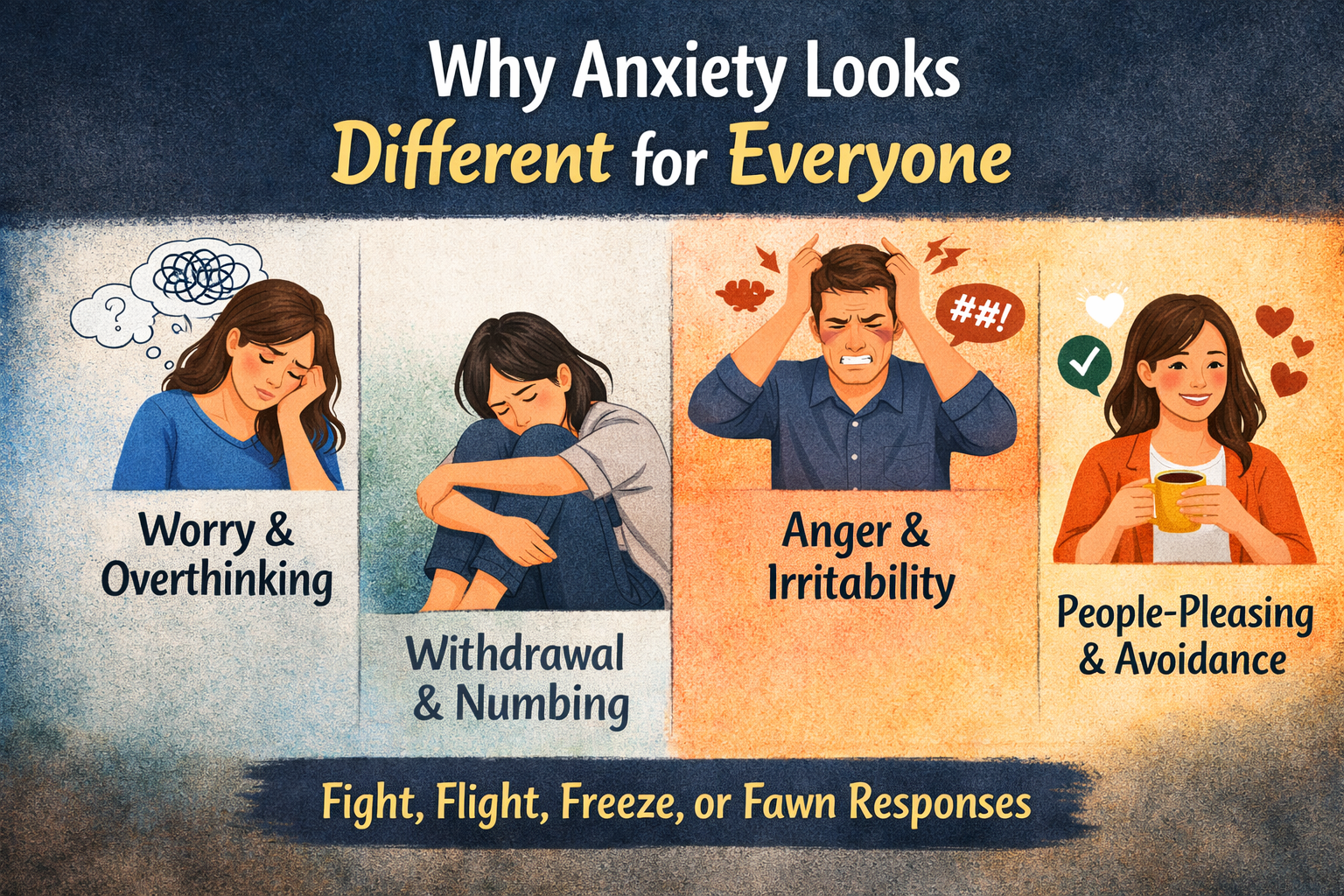
Why Anxiety Looks Different for Everyone
Why Anxiety Looks Different for Everyone
When most people think about anxiety, they imagine someone who is constantly worried, nervous, or panicking.
But anxiety does not always look like that.
In reality, anxiety can show up in many different ways, and sometimes people don’t even realize what they are experiencing is anxiety at all.
Understanding this can be incredibly important for recognizing what is happening in your mind and body.
Anxiety Is the Body’s Alarm System
At its core, anxiety is not simply a feeling—it is part of the body’s natural alarm system.
Your nervous system is constantly scanning your environment for potential threats or dangers. When it detects something that feels unsafe, it activates a response designed to protect you.
This response can show up physically as:
• a racing heart
• tightness in the chest
• shortness of breath
• stomach discomfort
• restlessness
This reaction is meant to prepare the body to respond quickly in order to stay safe.
However, the way this alarm system expresses itself can be very different from person to person.
The Fight, Flight, Freeze, or Fawn Response
When the nervous system senses danger or stress, it may activate different survival responses.
Some people experience fight, which can look like irritability, frustration, or anger.
Others experience flight, which may show up as restlessness, panic, overthinking, or constantly trying to escape stressful situations.
Some people experience freeze, where they shut down emotionally, withdraw, or feel numb and disconnected.
Another response that many people experience is fawn, where someone becomes overly focused on pleasing others, avoiding conflict, or trying to keep everyone around them happy.
All of these responses can be connected to anxiety.
When Anxiety Shows Up as Anger or Irritability
Many people say things like:
“I don’t have anxiety. I just get angry.”
But anger and irritability can sometimes be the body’s way of responding to internal stress or feeling overwhelmed.
When the nervous system feels constantly on alert, the brain may respond with frustration, impatience, or emotional reactivity.
In these situations, anger may actually be an expression of underlying anxiety.
When Anxiety Looks Like Overthinking
For some individuals, anxiety appears as constant mental activity.
The mind repeatedly tries to analyze situations, predict outcomes, or prevent potential problems.
This may look like:
• replaying conversations
• worrying about future events
• imagining worst-case scenarios
• difficulty turning off racing thoughts
The brain is essentially trying to maintain control by predicting every possible outcome.
When Anxiety Looks Like Withdrawal
Other people experience anxiety very differently.
Instead of becoming restless or reactive, they may begin to withdraw.
This can include:
• avoiding social situations
• isolating from others
• shutting down emotionally
• feeling mentally overwhelmed
In these situations, the nervous system attempts to reduce stimulation by pulling away from stressors.
Why Your Nervous System Responds This Way
Your nervous system learns patterns based on life experiences.
For example, if someone grew up in an environment where staying alert helped them stay safe, their brain may continue using that same strategy later in life.
These patterns are not signs that something is wrong with you.
They are learned survival responses.
Understanding this can help reduce the shame or confusion many people feel when they struggle with anxiety symptoms.
Learning to Recognize Your Anxiety
Because anxiety can appear in many different ways, recognizing it is often the first step toward improving mental health.
When people understand how their nervous system responds to stress, they can begin to develop healthier coping strategies.
Therapy, self-awareness, and supportive mental health care can help individuals learn how to regulate their nervous system and respond to stress in healthier ways.
You Are Not Broken
One of the most important things to remember is this:
Your anxiety does not mean something is wrong with you.
It often means your nervous system learned to prioritize survival before it learned safety.
With the right support, people can learn new ways to regulate emotions, manage stress, and build a greater sense of internal stability.
If you are struggling with anxiety or emotional overwhelm, professional support can help you better understand your nervous system and develop effective strategies for healing.
👉 Schedule a consultation today to learn more about your mental health and available treatment options.

Are We Repeating History? Screen Time and Child Development
Adults consume many substances with some understanding of their effects. Alcohol, nicotine, caffeine, and other drugs are widely recognized as products that can affect the body and brain. Adults, at least in theory, are able to make informed choices because research exists, risks are discussed, and warnings are available.
Children do not have that same informed choice.
As parents and caregivers, we would never intentionally offer a baby alcohol, opium, cocaine, or cigarettes. Most people would immediately reject the idea because we now understand how harmful those substances can be to children’s development.
Yet history reminds us that many practices once considered normal, harmless, and even beneficial were later recognized as deeply harmful.
This raises an uncomfortable but necessary question:
What are we normalizing today that future generations may one day look back on with disbelief?
One possible answer is early and excessive screen exposure.
Historical Lessons About What Society Once Called “Safe”
When Harmful Practices Were Considered Normal
History shows that harmful products were not always viewed as dangerous.
In earlier centuries, alcohol was sometimes added to milk to calm babies or help with sleep and teething. During the eighteenth and nineteenth centuries, opium-based products were sold over the counter and commonly given to children.
When the harms of opium became more apparent, cocaine-based tooth drops were marketed as a solution.
These practices sound shocking today, but at the time they were socially accepted.
Even in the twentieth century, stimulant exposure around children was normalized in other ways. Cocaine was removed from Coca-Cola only after its risks became more widely understood. Smoking was glamorized for decades and presented as fashionable and harmless.
The lesson from history is clear:
Social acceptance is not the same as safety.
Something can be common, convenient, and culturally normalized while still being harmful.
The Question for the Twenty-First Century
If previous generations unintentionally exposed children to harmful substances because society saw them as normal, it is worth asking what current parenting habits may later be viewed the same way.
Today, one of the most normalized practices in modern childhood is giving young children access to smart devices.
The Normalization of Screens in Early Childhood
Screens are everywhere.
We see them in restaurants, waiting rooms, shopping carts, living rooms, and strollers. A child with a tablet or phone barely draws attention anymore.
In many homes, device use has become part of the daily rhythm of life.
Part of the reason screens feel acceptable is because they are effective.
A device can quiet a child quickly. It can occupy a toddler during meals. It can reduce noise, movement, and conflict in the short term.
For overwhelmed parents, that convenience can feel like relief.
But the fact that something works in the moment does not mean it supports healthy development over time.
Children Are Not Just Using Screens — They Are Being Shaped by Them
Some people argue that a device is different from a substance because it is not swallowed or ingested.
However, screens are still consumed visually and neurologically.
Their impact does not come only from what appears on the screen. It also comes from what screen time replaces:
• Eye contact
• Conversation
• Imaginative play
• Movement
• Frustration tolerance
• Family interaction
• Engagement with the real world
This is particularly important in infancy and early childhood, when the brain develops through repeated interaction with caregivers, language, physical play, and sensory experiences.
The Brain, Dopamine, and the Pull of Stimulation
Highly stimulating experiences activate the brain’s dopamine reward system.
Dopamine plays an important role in motivation, reward seeking, and attention.
Fast-moving visuals, instant rewards, constant novelty, and predictable soothing make screens extremely appealing to young brains.
The concern is not simply that children enjoy screens.
The concern is that repeated exposure to this kind of stimulation can shape attention patterns, emotional coping, and behavioral expectations.
When External Soothing Replaces Emotional Regulation
Young children are not born knowing how to regulate emotions.
They learn this through co-regulation with caregivers.
When a child is upset, an adult helps them name the feeling, tolerate discomfort, and gradually develop internal coping skills.
But when screens become the primary response to distress, boredom, or frustration, children may begin to learn a different pattern:
When I feel uncomfortable, I need something outside of me to make the feeling stop.
Over time, this may affect emotional resilience and frustration tolerance.
Developmental Consequences of Excessive Screen Exposure
Language Development
Children learn language through:
• eye contact
• shared attention
• facial expressions
• back-and-forth interaction
Meals, playtime, errands, and conversation provide rich opportunities for language growth.
When screen use replaces these interactions, language development opportunities decrease.
Attention and Cognitive Development
Children who become accustomed to rapid digital stimulation may struggle with slower paced tasks.
Listening, waiting, and problem solving require sustained mental effort.
When the brain becomes conditioned to constant novelty, everyday life can begin to feel under-stimulating.
This can appear as:
• shorter attention span
• distractibility
• low frustration tolerance
Emotional Regulation and Mental Health
Children need repeated opportunities to experience boredom, disappointment, waiting, and frustration with adult support.
These experiences help build coping capacity.
When screens are used to avoid these moments, children may miss important emotional development opportunities.
Over time this may contribute to anxiety, emotional reactivity, and difficulty tolerating discomfort.
Physical Development
Childhood development is also physical.
Movement helps develop motor skills, coordination, and strength.
Running, climbing, drawing, building, and exploring are essential developmental experiences.
Long periods of sedentary screen use may reduce these opportunities.
Sleep and Daily Functioning
Screen exposure—especially at night—can interfere with sleep.
Children who use devices late may fall asleep later and sleep less deeply.
Poor sleep then affects mood, focus, learning, and behavior the next day.
A Growing Public Health Concern
We are still living through the early stages of widespread device exposure in childhood.
However, emerging patterns raise important questions.
If current trends continue, we may see increasing difficulties with:
• attention
• emotional regulation
• resilience
• social connection
• mental well-being
This issue goes beyond parenting preferences.
It touches education, health, and child development at a societal level.
What Parents Can Do
Delay Early Exposure
The longer screens can be delayed in early childhood, the more time children have to develop foundational skills through real-world experiences.
Set Clear Boundaries
Simple rules help, such as:
• no devices during meals
• no devices in bedrooms
These boundaries encourage conversation and better sleep.
Create Device-Free Times
Families benefit from predictable screen-free routines.
For example:
• device-free evenings
• screen-free meals
• outdoor playtime
Model Healthy Device Use
Children learn not only from what adults say but from what adults do.
Healthy screen habits from parents shape children’s behavior.
Conclusion
History reminds us that what society calls “normal” is not always what is best for children.
Practices like alcohol for babies, opium for teething, and the glamorization of smoking were once accepted before their harms became clear.
Today, excessive screen exposure may represent a similar challenge.
Technology is not inherently harmful.
But understanding how it affects child development allows families to make thoughtful decisions that support healthier growth.
If you would like guidance on child mental health, attention concerns, or emotional development, consider scheduling a consultation.