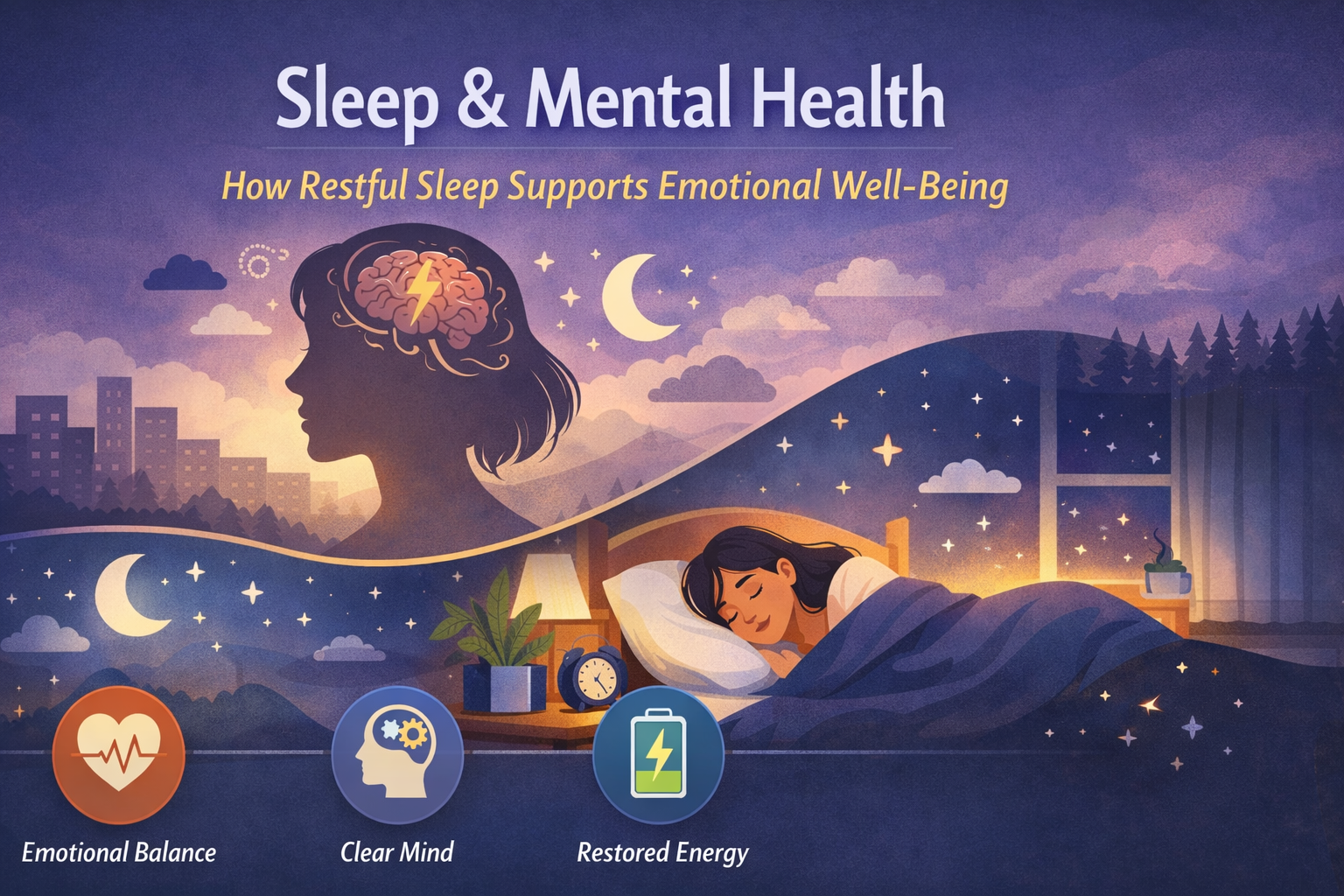
Sleep and Mental Health: Why Quality Sleep Is Essential for Emotional Well-Being
Sleep is one of the most important foundations of mental health, yet it is often the first thing people sacrifice in busy daily life. Many individuals assume that feeling tired, restless, or mentally drained is simply part of modern living. However, sleep plays a critical role in how the brain regulates mood, manages stress, processes memories, and maintains emotional balance.
When sleep is disrupted, the brain has difficulty restoring itself. Over time, poor sleep can affect concentration, emotional regulation, motivation, and overall mental well-being.
Understanding the relationship between sleep and mental health can help individuals recognize why improving sleep quality is often an important step in supporting emotional stability.
How Sleep Affects the Brain
During sleep, the brain performs several essential functions that support mental and emotional health. It processes information from the day, organizes memories, and restores important neurological systems that help regulate mood and behavior.
Sleep also plays a key role in regulating neurotransmitters such as serotonin and dopamine, which influence mood, motivation, and emotional responses.
When sleep is consistently disrupted, these systems may not function optimally, which can contribute to symptoms such as irritability, anxiety, difficulty concentrating, and low mood.
The Connection Between Sleep and Anxiety
Many individuals experiencing anxiety also struggle with sleep. Racing thoughts, excessive worry, and heightened alertness can make it difficult for the nervous system to relax enough to fall asleep.
At the same time, poor sleep can increase anxiety symptoms the following day. When the brain is sleep deprived, it becomes more reactive to stress and less able to regulate emotional responses effectively.
This creates a cycle in which anxiety interferes with sleep, and poor sleep then intensifies anxiety.
Sleep and Depression
Sleep disturbance is also closely associated with depression. Some individuals may experience insomnia, where falling asleep or staying asleep becomes difficult. Others may experience hypersomnia, where they sleep excessively but still feel fatigued.
Research shows that sleep plays a significant role in emotional processing. When sleep is disrupted, the brain may have difficulty regulating negative emotions, which can contribute to feelings of sadness, hopelessness, or low motivation.
Addressing sleep patterns can often become an important component of mental health treatment.
How Sleep Affects Attention and Cognitive Function
Sleep is essential for concentration, memory, and decision making. When individuals are sleep deprived, the brain struggles to maintain focus, process information efficiently, and sustain attention.
This can lead to:
• difficulty concentrating
• slower thinking
• forgetfulness
• reduced productivity
• increased mental fatigue
For individuals with conditions such as ADHD, sleep disturbances may further intensify difficulties with focus and emotional regulation.
Signs That Sleep May Be Affecting Your Mental Health
Some signs that sleep patterns may be impacting emotional well-being include:
• difficulty falling asleep most nights
• waking up frequently during the night
• feeling tired despite getting enough hours of sleep
• increased irritability or emotional sensitivity
• difficulty concentrating during the day
• relying heavily on caffeine to stay alert
When these patterns persist, it may be helpful to evaluate sleep habits and explore strategies that support better rest.
Strategies That Can Support Healthy Sleep
Improving sleep does not always require dramatic changes. Small adjustments in daily routines can often make a meaningful difference.
Helpful habits may include:
Maintain a Consistent Sleep Schedule
Going to bed and waking up at the same time each day helps regulate the body’s internal clock.
Limit Screen Exposure Before Bed
Bright screens and stimulating content can make it harder for the brain to transition into sleep.
Create a Calm Nighttime Routine
Activities such as reading, stretching, or practicing relaxation techniques can signal to the brain that it is time to wind down.
Reduce Stimulants Late in the Day
Caffeine and other stimulants can interfere with the body’s ability to fall asleep naturally.
Keep the Sleep Environment Comfortable
A dark, quiet, and cool bedroom can promote deeper and more restorative sleep.
When to Seek Professional Support
If sleep difficulties persist for several weeks or begin to interfere with daily functioning, it may be helpful to speak with a healthcare professional.
Mental health professionals can help identify potential causes of sleep disturbance and develop personalized treatment strategies that support both sleep quality and emotional well-being.
In some cases, psychotherapy, lifestyle adjustments, or medication may be considered to improve sleep patterns and restore balance to the nervous system.
Conclusion
Sleep is not simply a period of rest. It is an active and essential process that allows the brain to regulate emotions, restore energy, and maintain mental clarity.
Prioritizing healthy sleep habits can significantly improve mood, focus, resilience, and overall mental health. When sleep improves, many individuals notice meaningful improvements in emotional stability and daily functioning.
Taking care of sleep is one of the most powerful ways to support both the mind and body.
If you would like to book an appointment today please click here.

Are We Repeating History? Screen Time and Child Development
Adults consume many substances with some understanding of their effects. Alcohol, nicotine, caffeine, and other drugs are widely recognized as products that can affect the body and brain. Adults, at least in theory, are able to make informed choices because research exists, risks are discussed, and warnings are available.
Children do not have that same informed choice.
As parents and caregivers, we would never intentionally offer a baby alcohol, opium, cocaine, or cigarettes. Most people would immediately reject the idea because we now understand how harmful those substances can be to children’s development.
Yet history reminds us that many practices once considered normal, harmless, and even beneficial were later recognized as deeply harmful.
This raises an uncomfortable but necessary question:
What are we normalizing today that future generations may one day look back on with disbelief?
One possible answer is early and excessive screen exposure.
Historical Lessons About What Society Once Called “Safe”
When Harmful Practices Were Considered Normal
History shows that harmful products were not always viewed as dangerous.
In earlier centuries, alcohol was sometimes added to milk to calm babies or help with sleep and teething. During the eighteenth and nineteenth centuries, opium-based products were sold over the counter and commonly given to children.
When the harms of opium became more apparent, cocaine-based tooth drops were marketed as a solution.
These practices sound shocking today, but at the time they were socially accepted.
Even in the twentieth century, stimulant exposure around children was normalized in other ways. Cocaine was removed from Coca-Cola only after its risks became more widely understood. Smoking was glamorized for decades and presented as fashionable and harmless.
The lesson from history is clear:
Social acceptance is not the same as safety.
Something can be common, convenient, and culturally normalized while still being harmful.
The Question for the Twenty-First Century
If previous generations unintentionally exposed children to harmful substances because society saw them as normal, it is worth asking what current parenting habits may later be viewed the same way.
Today, one of the most normalized practices in modern childhood is giving young children access to smart devices.
The Normalization of Screens in Early Childhood
Screens are everywhere.
We see them in restaurants, waiting rooms, shopping carts, living rooms, and strollers. A child with a tablet or phone barely draws attention anymore.
In many homes, device use has become part of the daily rhythm of life.
Part of the reason screens feel acceptable is because they are effective.
A device can quiet a child quickly. It can occupy a toddler during meals. It can reduce noise, movement, and conflict in the short term.
For overwhelmed parents, that convenience can feel like relief.
But the fact that something works in the moment does not mean it supports healthy development over time.
Children Are Not Just Using Screens — They Are Being Shaped by Them
Some people argue that a device is different from a substance because it is not swallowed or ingested.
However, screens are still consumed visually and neurologically.
Their impact does not come only from what appears on the screen. It also comes from what screen time replaces:
• Eye contact
• Conversation
• Imaginative play
• Movement
• Frustration tolerance
• Family interaction
• Engagement with the real world
This is particularly important in infancy and early childhood, when the brain develops through repeated interaction with caregivers, language, physical play, and sensory experiences.
The Brain, Dopamine, and the Pull of Stimulation
Highly stimulating experiences activate the brain’s dopamine reward system.
Dopamine plays an important role in motivation, reward seeking, and attention.
Fast-moving visuals, instant rewards, constant novelty, and predictable soothing make screens extremely appealing to young brains.
The concern is not simply that children enjoy screens.
The concern is that repeated exposure to this kind of stimulation can shape attention patterns, emotional coping, and behavioral expectations.
When External Soothing Replaces Emotional Regulation
Young children are not born knowing how to regulate emotions.
They learn this through co-regulation with caregivers.
When a child is upset, an adult helps them name the feeling, tolerate discomfort, and gradually develop internal coping skills.
But when screens become the primary response to distress, boredom, or frustration, children may begin to learn a different pattern:
When I feel uncomfortable, I need something outside of me to make the feeling stop.
Over time, this may affect emotional resilience and frustration tolerance.
Developmental Consequences of Excessive Screen Exposure
Language Development
Children learn language through:
• eye contact
• shared attention
• facial expressions
• back-and-forth interaction
Meals, playtime, errands, and conversation provide rich opportunities for language growth.
When screen use replaces these interactions, language development opportunities decrease.
Attention and Cognitive Development
Children who become accustomed to rapid digital stimulation may struggle with slower paced tasks.
Listening, waiting, and problem solving require sustained mental effort.
When the brain becomes conditioned to constant novelty, everyday life can begin to feel under-stimulating.
This can appear as:
• shorter attention span
• distractibility
• low frustration tolerance
Emotional Regulation and Mental Health
Children need repeated opportunities to experience boredom, disappointment, waiting, and frustration with adult support.
These experiences help build coping capacity.
When screens are used to avoid these moments, children may miss important emotional development opportunities.
Over time this may contribute to anxiety, emotional reactivity, and difficulty tolerating discomfort.
Physical Development
Childhood development is also physical.
Movement helps develop motor skills, coordination, and strength.
Running, climbing, drawing, building, and exploring are essential developmental experiences.
Long periods of sedentary screen use may reduce these opportunities.
Sleep and Daily Functioning
Screen exposure—especially at night—can interfere with sleep.
Children who use devices late may fall asleep later and sleep less deeply.
Poor sleep then affects mood, focus, learning, and behavior the next day.
A Growing Public Health Concern
We are still living through the early stages of widespread device exposure in childhood.
However, emerging patterns raise important questions.
If current trends continue, we may see increasing difficulties with:
• attention
• emotional regulation
• resilience
• social connection
• mental well-being
This issue goes beyond parenting preferences.
It touches education, health, and child development at a societal level.
What Parents Can Do
Delay Early Exposure
The longer screens can be delayed in early childhood, the more time children have to develop foundational skills through real-world experiences.
Set Clear Boundaries
Simple rules help, such as:
• no devices during meals
• no devices in bedrooms
These boundaries encourage conversation and better sleep.
Create Device-Free Times
Families benefit from predictable screen-free routines.
For example:
• device-free evenings
• screen-free meals
• outdoor playtime
Model Healthy Device Use
Children learn not only from what adults say but from what adults do.
Healthy screen habits from parents shape children’s behavior.
Conclusion
History reminds us that what society calls “normal” is not always what is best for children.
Practices like alcohol for babies, opium for teething, and the glamorization of smoking were once accepted before their harms became clear.
Today, excessive screen exposure may represent a similar challenge.
Technology is not inherently harmful.
But understanding how it affects child development allows families to make thoughtful decisions that support healthier growth.
If you would like guidance on child mental health, attention concerns, or emotional development, consider scheduling a consultation.
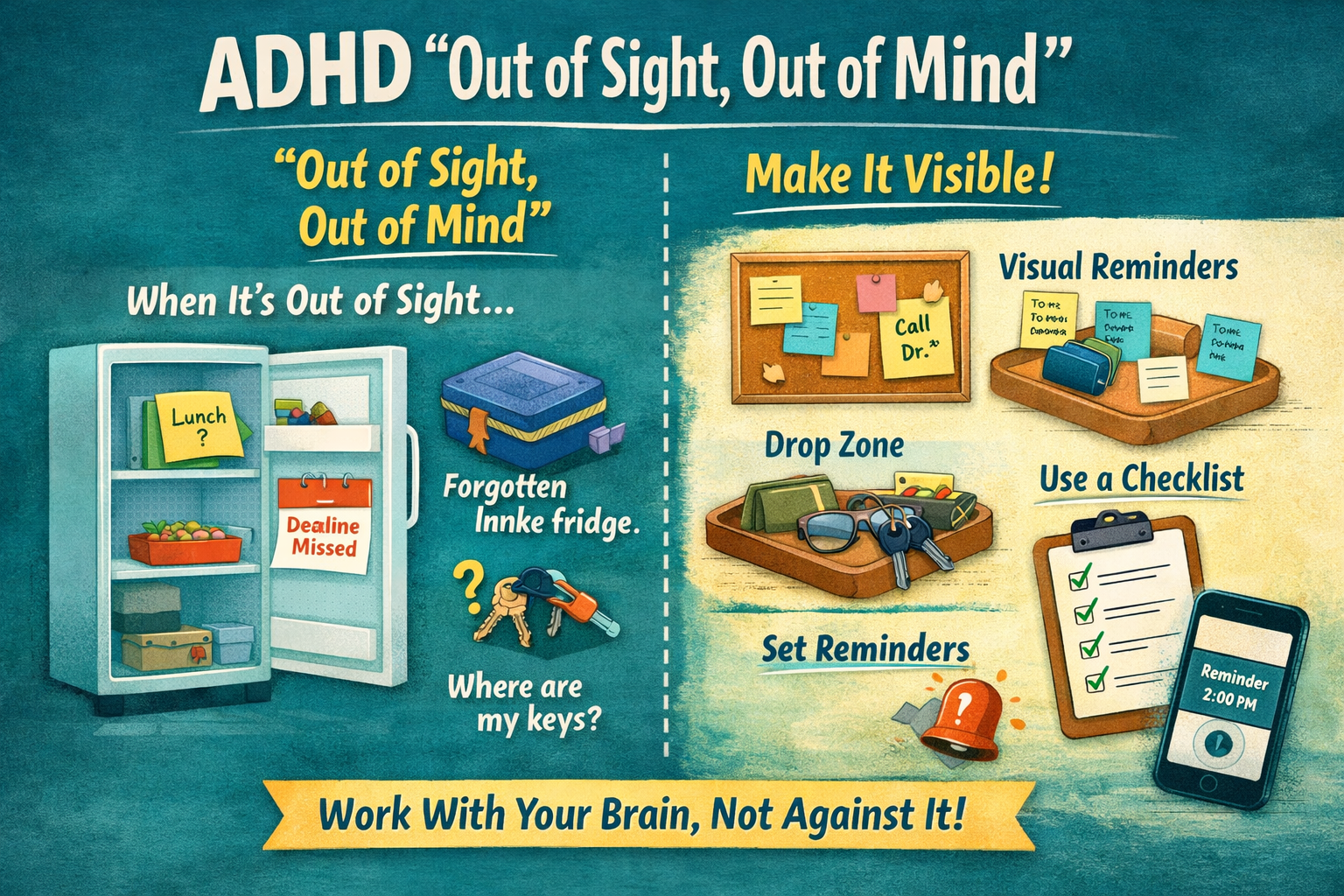
ADHD “Out of Sight, Out of Mind”: Why It Happens and Strategies That Actually Help
What Does “Out of Sight, Out of Mind” Mean in ADHD?
Have you ever put something down… and the moment it’s no longer in front of you, it’s like it completely disappeared from your mind?
For many people with ADHD, this is a very real and common experience.
This is often described as “out of sight, out of mind.”
It is not laziness.
It is not carelessness.
It is not a lack of responsibility.
It is related to how the ADHD brain processes attention, memory, and visual cues.
Why This Happens in ADHD
The ADHD brain relies heavily on external, visible information to keep track of tasks, responsibilities, and objects.
When something is visible, it stays active in awareness.
But once it disappears from view, the brain may stop tracking it altogether.
This can affect:
Remembering tasks
Keeping track of responsibilities
Following through on plans
Managing daily routines
This is closely connected to executive function, which includes working memory and organization.
Common Real-Life Examples
People with ADHD often experience things like:
Forgetting food in the fridge
Missing deadlines
Forgetting to respond to texts or emails
Losing track of important items
Buying things they already own
These are not signs of failure — they are signs of how the brain is wired.
ADHD Is Not About Trying Harder
One of the biggest misconceptions is that people with ADHD just need to “try harder” or “be more organized.”
In reality, traditional organization methods often fail because they are not designed for how the ADHD brain works.
The key is not perfection.
The key is creating systems that support the brain.
Strategies That Actually Help
Here are simple, practical strategies that work with ADHD instead of against it:
1. Make Things Visible
Use clear containers, open shelves, or leave important items in places where you will see them daily.
2. Use Visual Reminders
Sticky notes, whiteboards, or phone widgets can help keep important tasks in sight.
3. Create “Drop Zones”
Designate one consistent, visible place for essentials like keys, wallet, medications, or documents.
4. Externalize Your Memory
Use tools like calendars, reminders, alarms, and checklists.
Think of these as an external brain system.
Work With Your Brain, Not Against It
ADHD does not mean something is wrong with you.
It means your brain processes information differently.
When you create an environment that supports visibility, structure, and reminders, daily life becomes more manageable.
Final Thought
If you experience “out of sight, out of mind,” remember this:
Your brain isn’t broken.
It just works better when your environment works with it.
If you would like support understanding ADHD or improving daily functioning, feel free to schedule a consultation.