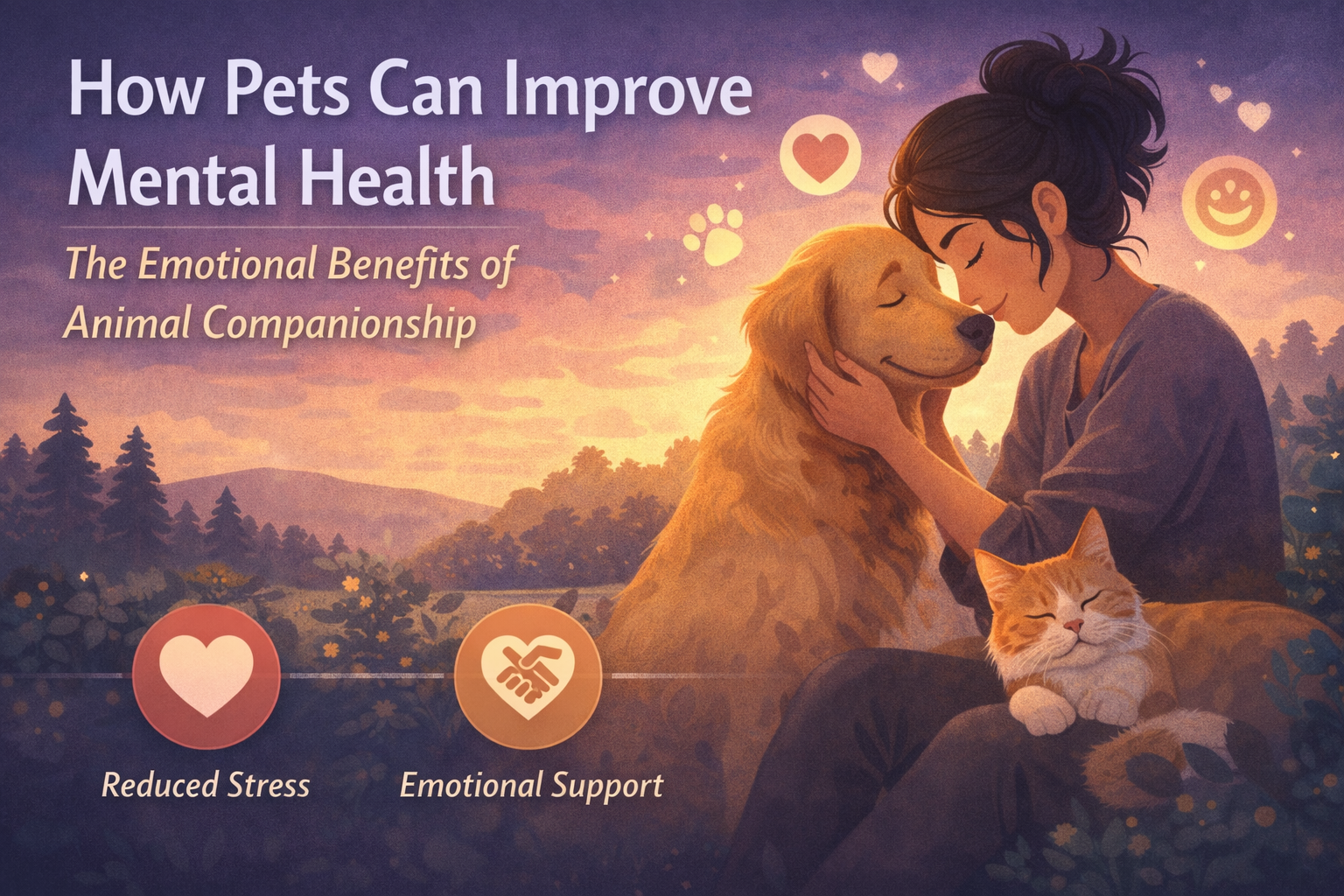
How Pets Can Improve Mental Health: The Emotional Benefits of Animal Companionship
Introduction
Pets are often considered part of the family, but their role in our lives can go far beyond companionship. Research increasingly shows that animals can have a meaningful positive impact on mental health.
From reducing stress and anxiety to providing emotional support and structure in daily life, pets can play an important role in supporting emotional well-being.
For many individuals, the relationship with a pet provides comfort, stability, and a sense of connection that contributes to better overall mental health.
The Emotional Bond Between Humans and Animals
Humans naturally form emotional connections with animals. When we interact with pets—whether through petting, playing, or simply spending time together—the body releases hormones associated with bonding and relaxation.
One of these hormones is oxytocin, often referred to as the “bonding hormone,” which helps promote feelings of trust, calmness, and emotional safety.
At the same time, interacting with animals can help reduce levels of cortisol, the hormone associated with stress.
This biological response is one reason many people report feeling calmer and more relaxed after spending time with their pets.
How Pets Help Reduce Stress and Anxiety
Pets can provide a calming presence during moments of stress or emotional difficulty. The simple act of petting a dog or cat can slow the heart rate and help the nervous system shift into a more relaxed state.
For individuals experiencing anxiety, pets can offer:
• comfort during stressful moments
• a grounding presence during emotional distress
• a sense of safety and companionship
Animals do not judge or criticize. Their consistent presence can create a reassuring environment for people who may feel overwhelmed or isolated.
Pets and Emotional Support
One of the most valuable aspects of pet companionship is the emotional support they provide.
For individuals struggling with depression, loneliness, or emotional fatigue, pets can provide:
• a sense of purpose
• daily companionship
• unconditional affection
Caring for an animal also encourages routine and responsibility, which can help individuals maintain structure in their daily lives.
Simple activities such as feeding, walking, or grooming a pet can help reinforce daily habits and encourage engagement with the environment.
Pets Encourage Physical Activity
Many pets, especially dogs, require regular physical activity such as walking or playing. This can naturally encourage owners to move more and spend time outside.
Physical activity is strongly connected to mental health. Exercise helps release endorphins, chemicals in the brain that improve mood and reduce stress.
Regular walks, outdoor time, and play with pets can therefore support both physical health and emotional well-being.
Pets Help Reduce Feelings of Loneliness
Loneliness is a growing concern in modern society, and social isolation can negatively impact mental health.
Pets can provide consistent companionship and emotional connection. Even though they cannot replace human relationships, they often help reduce feelings of isolation and provide meaningful interaction.
For individuals who live alone or who are going through difficult life transitions, the presence of a pet can bring comfort and emotional stability.
Pets and Children’s Emotional Development
Pets can also play a valuable role in children’s emotional growth. Caring for an animal can help children learn important skills such as empathy, responsibility, and emotional awareness.
Children who grow up with pets often develop:
• compassion toward animals and others
• patience and nurturing behaviors
• emotional bonding skills
These experiences can contribute to healthy emotional development.
Important Considerations
While pets can offer many mental health benefits, it is important to recognize that caring for an animal is also a responsibility.
Before adopting a pet, individuals should consider factors such as:
• time commitment
• financial responsibility
• lifestyle compatibility
• the long-term care needs of the animal
Choosing the right pet for your lifestyle can help ensure a positive experience for both the owner and the animal.
Conclusion
The relationship between humans and animals is powerful and deeply meaningful. Pets can provide companionship, emotional comfort, structure, and opportunities for connection that support mental well-being.
While they are not a replacement for professional mental health care, animals can play a valuable supportive role in promoting emotional balance and resilience.
For many people, the presence of a pet becomes a source of daily joy, comfort, and emotional support.